
- Founding design team
- Information architecture
- Design system
- Product design
Chestnut is the software a carrier runs to manage its entire distribution network: producers, hierarchies, licensing, and the compensation that moves with every policy.
KOPPER joined as the founding design team and built the foundation the product stands on: the information architecture and the design system. That foundation stayed with Chestnut from zero to its first seven-figure deployments with Fortune 100 carriers.
Architecture
Layered tokens: Tailwind primitives feed a semantic theme, which feeds the base tokens every component reads from. Named once, inherited everywhere.
Components
A library specified to the edge. Every button, table cell, and sidebar state drawn, with nothing left to interpretation.
Type & color
A custom typeface, Chestnut Sans Display, on a fixed scale. A Chestnut palette sitting beside the full Tailwind range.
Synced to code
Bonsai is mirrored one to one in the codebase, so design and build never drift, and engineering moves from v1 to v2 at its own pace.
Legibility
Every icon carries its own plain-language description. Readable by the team, parsable by an agent.
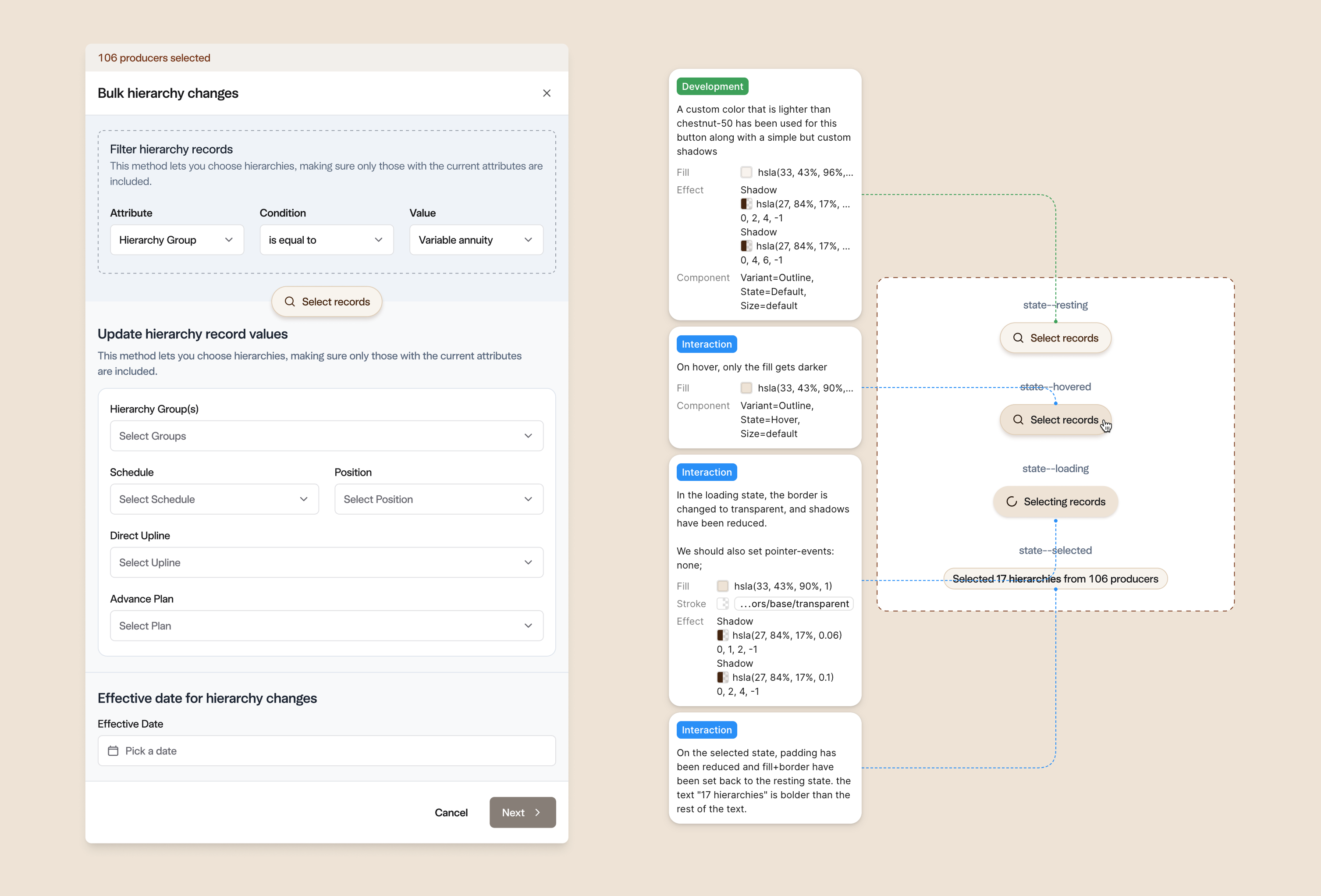

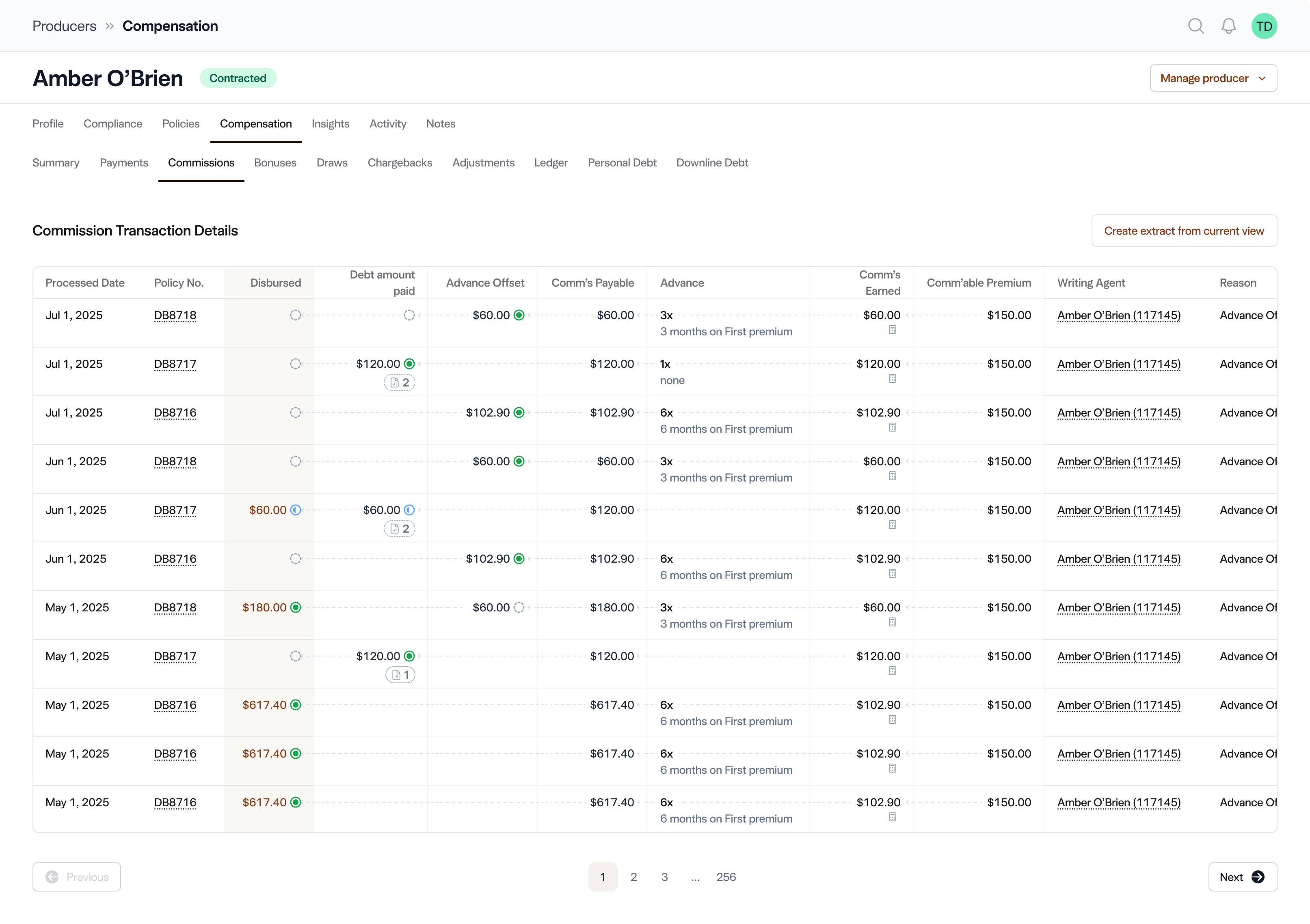
Purpose built: policy data, producer data, business rules, and premium transactions feed one core that runs hierarchies, compliance, retroactivity, commissions, debt, advances, and bonuses.
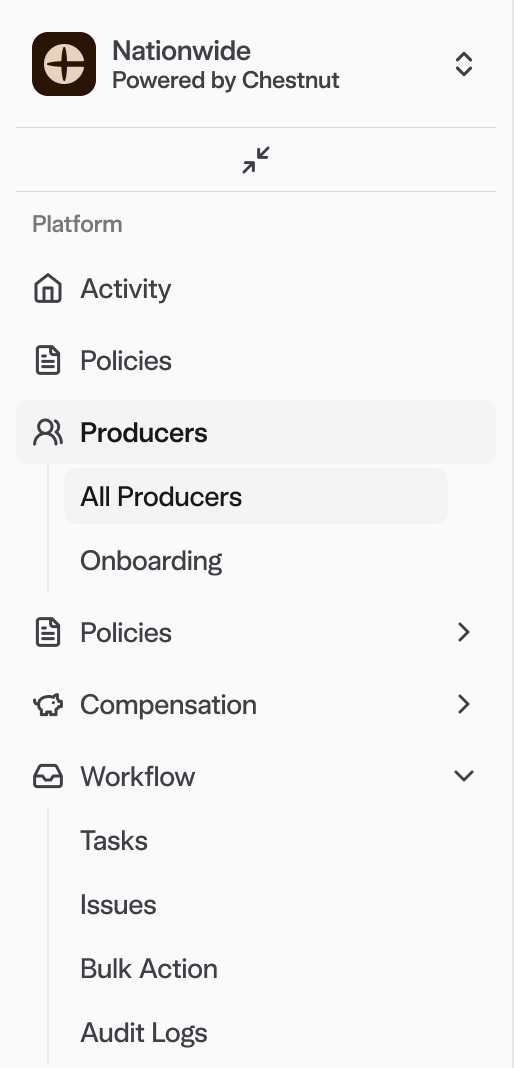
A single rail holds the entire operation: producers, policies, compensation, workflow, payouts, insights, and data. One vocabulary, carried across every workspace.
At its head, the co-branding tells the story of what Chestnut is: the software a carrier runs.

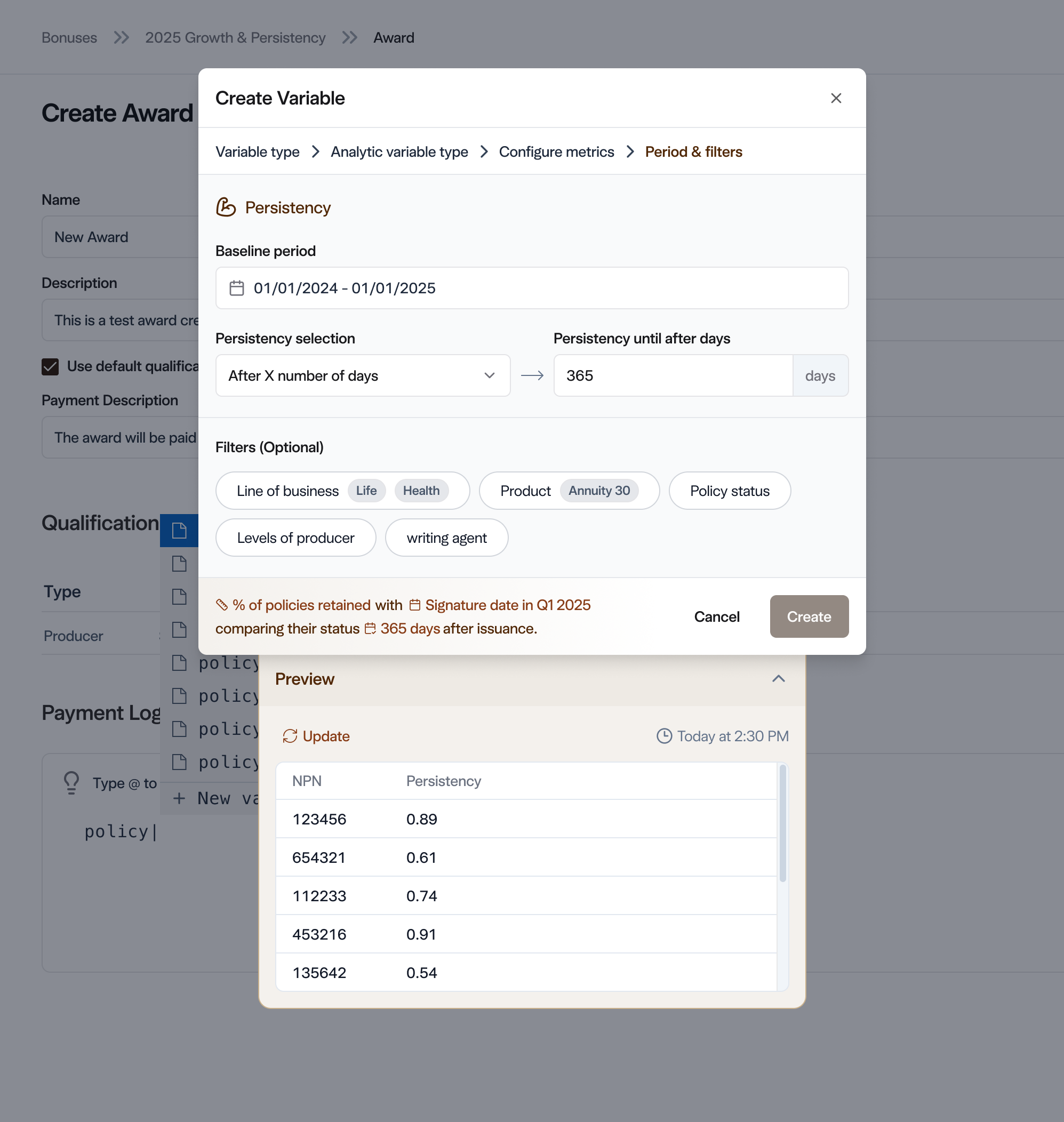
Percentage of policies retained, 365 days after issuance: defined once, previewed against live data, and reused wherever compensation calls it.